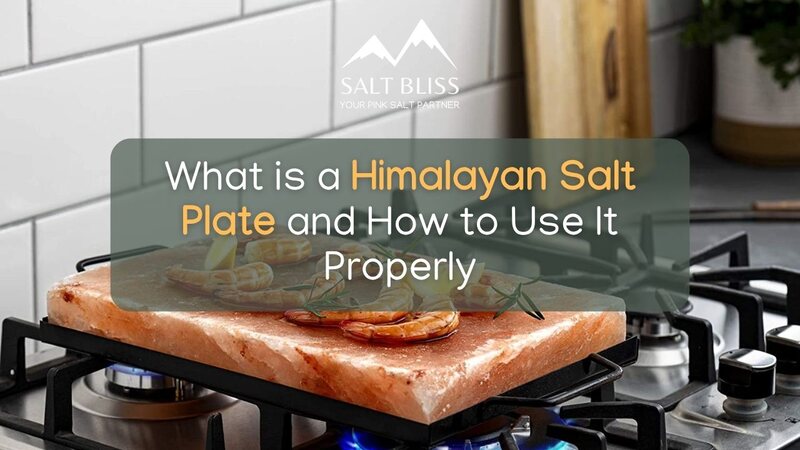


Professional kitchens are built on discipline. Ingredients are chosen after testing, repetition, and long service hours. Anything that fails under pressure is quickly removed from use.
Himalayan salt products have found a steady place in many restaurants because they behave predictably during cooking and service. Chefs do not use them as decoration alone. They use them because the salt responds well to heat, releases seasoning gradually, and fits into real kitchen routines.
This article is written for restaurant owners, chefs, food buyers, and new bulk purchasers who want a clear understanding before sourcing Himalayan salt products for professional use.
How Himalayan Salt Entered Professional Kitchens
Himalayan salt did not become common in restaurants overnight. It first appeared in fine dining kitchens where chefs were experimenting with alternative cooking surfaces. Over time, its practical advantages became clearer.
Chefs noticed that food cooked or served on salt surfaces behaved differently from food seasoned with refined salt alone. The results were consistent enough that many kitchens continued using it beyond trial phases.
Today, Himalayan salt products are found in a range of food service environments, from independent restaurants to hotel kitchens.
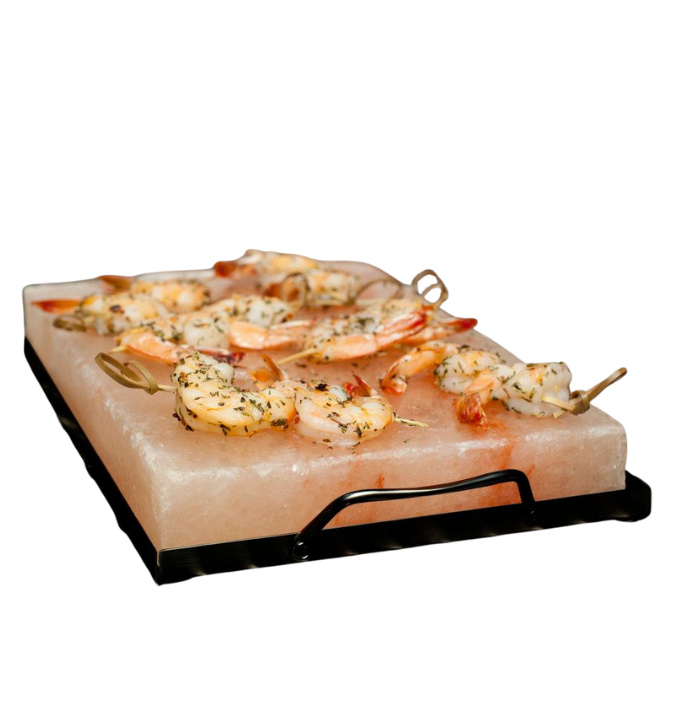
Why Chefs Pay Attention to Salt Quality
Salt plays a quiet but important role in cooking. It affects texture, moisture, and overall balance. In professional kitchens, salt must behave the same way every day.
Himalayan salt is minimally processed, which keeps its natural structure intact. This structure affects how salt interacts with food and heat. Unlike refined salt, which dissolves quickly and sharply, Himalayan salt releases seasoning more slowly.
This slower release gives chefs greater control during cooking and finishing.
Taste Control and Cooking Behavior
Gradual Seasoning During Cooking
Chefs often describe Himalayan salt as easier to manage. Food cooked on salt slabs or seasoned lightly with Himalayan salt does not become overly salty all at once.
This is especially important for proteins such as:
- Steak
- Fish
- Poultry
The goal is balance, not dominance. Himalayan salt supports that goal.
Heat Retention and Surface Stability
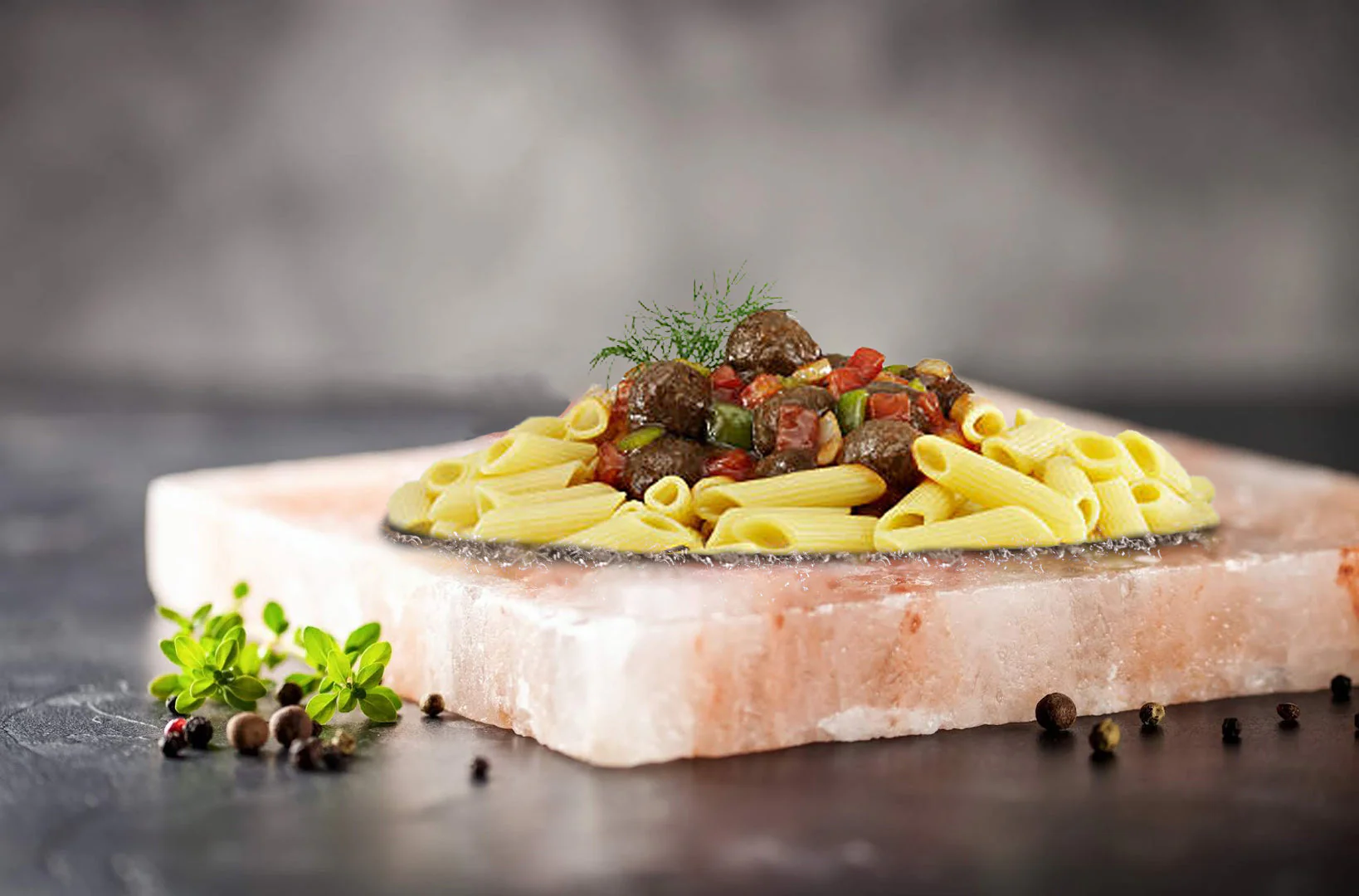
Salt blocks and slabs hold heat steadily when introduced gradually. Once heated, they provide an even cooking surface that reduces hot spots.
Chefs use this property for:
- Searing meats evenly
- Holding food warm during service
- Cold applications, such as dessert plating
Thickness and density are critical here, which is why professional buyers pay close attention to specifications rather than appearance.
Visual Role Without Extra Complexity
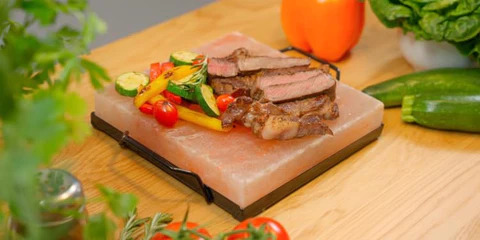
Presentation matters, but professional kitchens avoid unnecessary tools. Himalayan salt products serve both functional and visual roles without adding steps to service.
Salt slabs and tiles provide a clean, natural surface that fits well into open kitchens and table-side service. This allows chefs to present food directly, without additional plating layers.
The result feels intentional rather than decorative.
Types of Himalayan Salt Products Used by Restaurants
Cooking Blocks and Slabs
Cooking blocks are thick cuts of Himalayan salt designed for repeated heating and cooling. Most professional kitchens prefer slabs between 2 and 2.5 inches thick.
These slabs are used for:
- Cooking proteins
- Serving hot dishes
- Chilling cold items
Thin slabs often crack quickly, which is why thickness is a common concern for chefs.
Salt Tiles in Service Areas
Salt tiles are commonly installed in chef counters and tasting areas. They are valued for durability and uniform cutting rather than color intensity.
In many kitchens, salt tiles are used as part of the workspace rather than as decorative elements.
Finishing and Table Use
Some restaurants also use Himalayan salt as finishing salt or table seasoning. At this stage, food-grade handling is essential because the salt comes into direct contact with prepared dishes.
What New Buyers Often Misunderstand
Many first-time buyers assume all Himalayan salt products are the same. This assumption leads to problems during use.
Decorative Salt vs Kitchen-Grade Salt
Not all Himalayan salt is suitable for cooking. Decorative products may look similar but lack proper cutting, curing, or handling.
Professional kitchens look for:
- Food-grade confirmation
- Clean cutting methods
- Proper storage before shipment
Suppliers that work closely with chefs, such as Salt Bliss, usually separate kitchen-grade products from decorative lines.
Color Is Not a Performance Indicator
Color variation is natural in Himalayan salt. However, chefs focus more on density and structure.
A darker or lighter shade does not guarantee better performance. Weight, thickness, and mineral distribution matter far more during daily use.
Myths and Reality in Restaurant Use
There are several common misconceptions about Himalayan salt in kitchens.
One common belief is that Himalayan salt is only used for display. In reality, many kitchens use it daily for cooking and service.
Another belief is that it makes food too salty. When used correctly, it seasons gently and evenly.
A third misconception is that all suppliers provide the same quality. In practice, sourcing standards vary widely.
Common Buying Mistakes in Food Service
New buyers often face avoidable issues during their first orders.
The most common mistakes include buying slabs that are too thin, choosing decorative-grade products, and focusing on price instead of durability. These mistakes usually result in cracking, uneven heating, or short product life.
Restaurants that stick with a consistent supplier tend to experience fewer issues over time.
Why Restaurants Choose Bulk Sourcing
Bulk sourcing allows kitchens to maintain consistency across service periods. When slab size, thickness, and behavior remain the same, chefs can plan their cooking methods more confidently.
Bulk purchasing also reduces interruptions caused by frequent supplier changes. This is especially important for restaurants with multiple locations.
Suppliers such as Salt Bliss are often chosen because they maintain uniform cutting standards across repeat orders.
What Professional Buyers Ask Before Purchasing
Experienced buyers usually ask about:
- Origin of the salt
- Food-grade handling process
- Thickness tolerance
- Storage and care guidance
Clear answers help buyers decide without hesitation.
Final Thoughts
Restaurants continue using Himalayan salt products because they fit naturally into professional workflows. When sourced correctly, they support both cooking and presentation without creating extra steps.
For new buyers, understanding grade, thickness, and sourcing standards matters far more than appearance. Suppliers with food-service experience, including Salt Bliss, are usually better aligned with kitchen needs.
FAQs
Ans: Yes, when it is food-grade and handled properly.
Ans: With correct use, they can last many months in professional kitchens.
Ans: It seasons gently and allows natural flavors to remain clear.
Ans: Yes, many kitchens begin with limited quantities to test usage.
Ans: Most chefs prefer slabs between 2 and 2.5 inches.
Ans: Cracking usually happens due to thin cuts or sudden temperature changes.
CTA
If you are a chef, restaurant owner, or bulk buyer considering Himalayan salt products, review specifications carefully and work with suppliers who understand real kitchen use.